
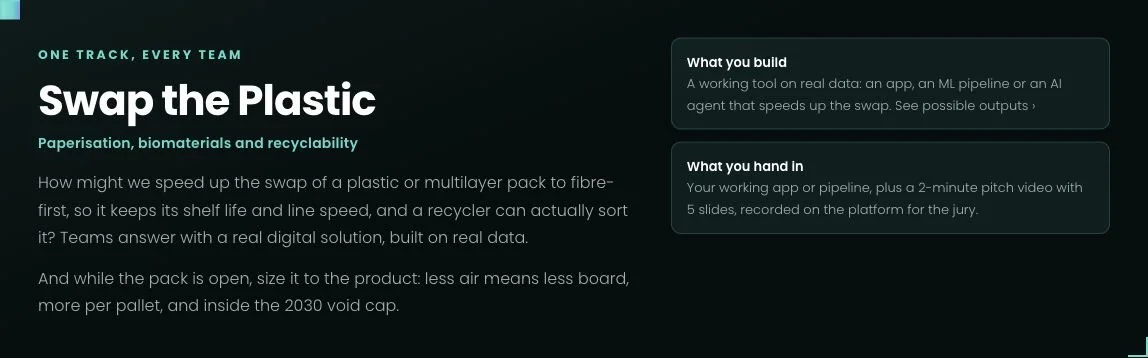
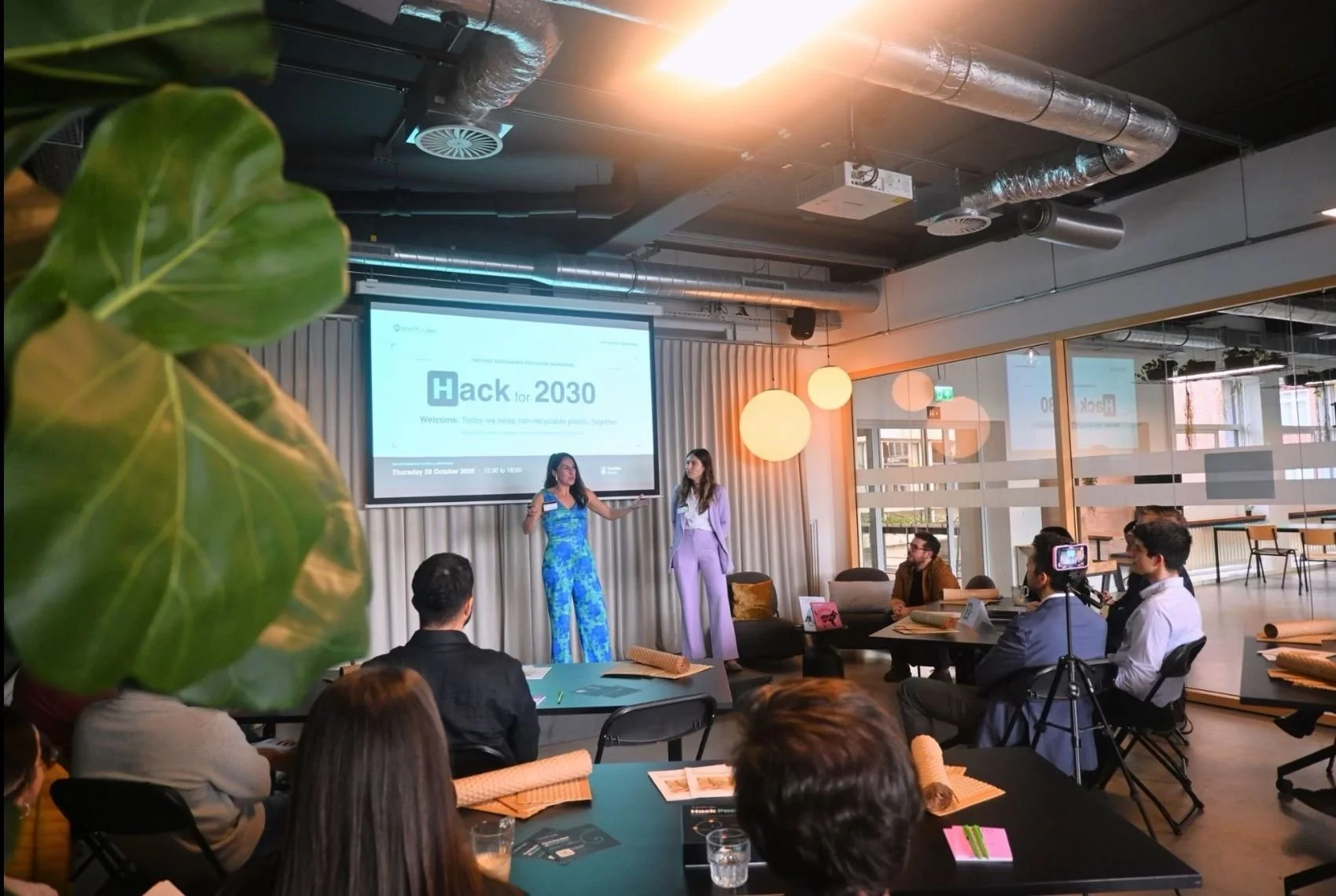
On 29 October, I joined H/Pack for 2030, a sustainable packaging hackathon in Amsterdam organised by AmPhi Labs.
The challenge was to explore how AI could help accelerate the transition towards more sustainable packaging. We had two hours to understand a problem, develop an idea and build something we could present to the jury.
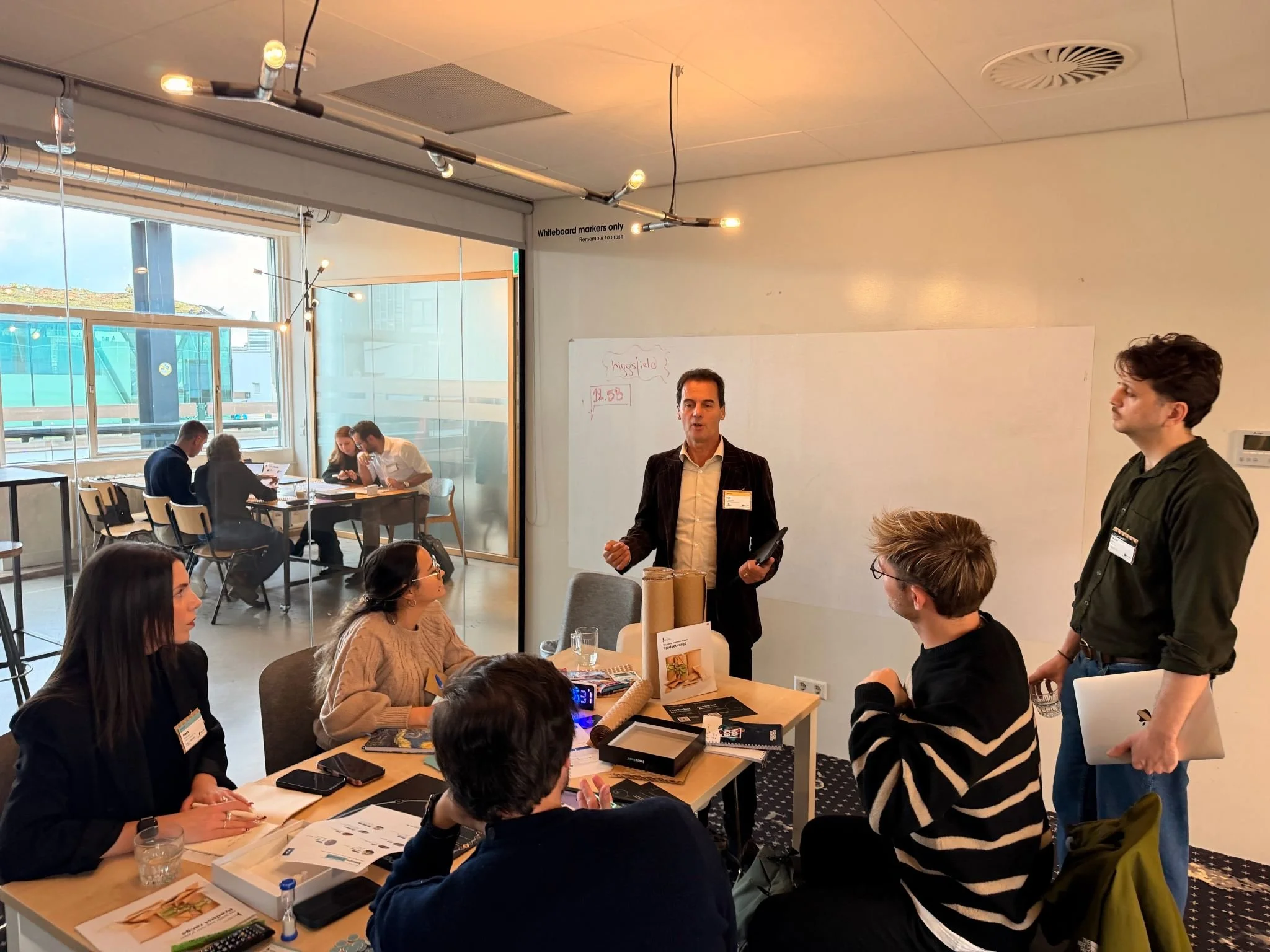
I teamed up with Błażej Dubiel, François Godet and Lina Daniela Ardila Diaz. Between us, we brought experience in packaging design, AI engineering, packaging development and biobased coatings research. We had never met before.
By the end of the afternoon, our team had won.
The problem behind our idea
In packaging design, finding an alternative material is only the beginning.
Plastic films can be lightweight and help protect food, but the properties that make them useful can also make recycling difficult. Flexible packs often combine different materials, coatings or adhesives to provide the right barrier and shelf life. These combinations can complicate sorting and recycling, as the CEFLEX design guidelines explain.
And designing a recyclable pack is only part of the picture. It also needs to be collected, sorted and processed in the market where it is sold. For context, the OECD estimates that just 9% of global plastic waste was actually recycled in 2019, after recycling losses. That figure covers all plastic waste, rather than packaging alone.
I explored this gap between recycling claims and reality in The Truth About Plastic Recycling.
A packaging alternative still needs to protect the product, work on the production line and meet the brand’s budget. Changing one part can affect everything else. Our discussions kept coming back to a question: how could we help brand owners understand those trade-offs earlier?
A tool to help brands compare their options
We developed a concept for an AI packaging redesign tool that helps brands create a shortlist of alternatives to packaging that is difficult to recycle.
A brand would provide its existing packaging specifications, product protection requirements and destination market. The tool would then compare candidate materials and structures, explaining their suitability, trade-offs and any gaps in the available information.
The aim is to give packaging teams a clearer starting point for conversations with suppliers and physical testing. A recommendation on screen still needs validation, particularly when food safety, shelf life and production performance are involved.
Environmental benefits would also need evidence. A change in material alone does not establish that a pack has a lower overall impact. It is a principle I also explore in How to truly embrace eco-branding without greenwashing.
What made the afternoon work
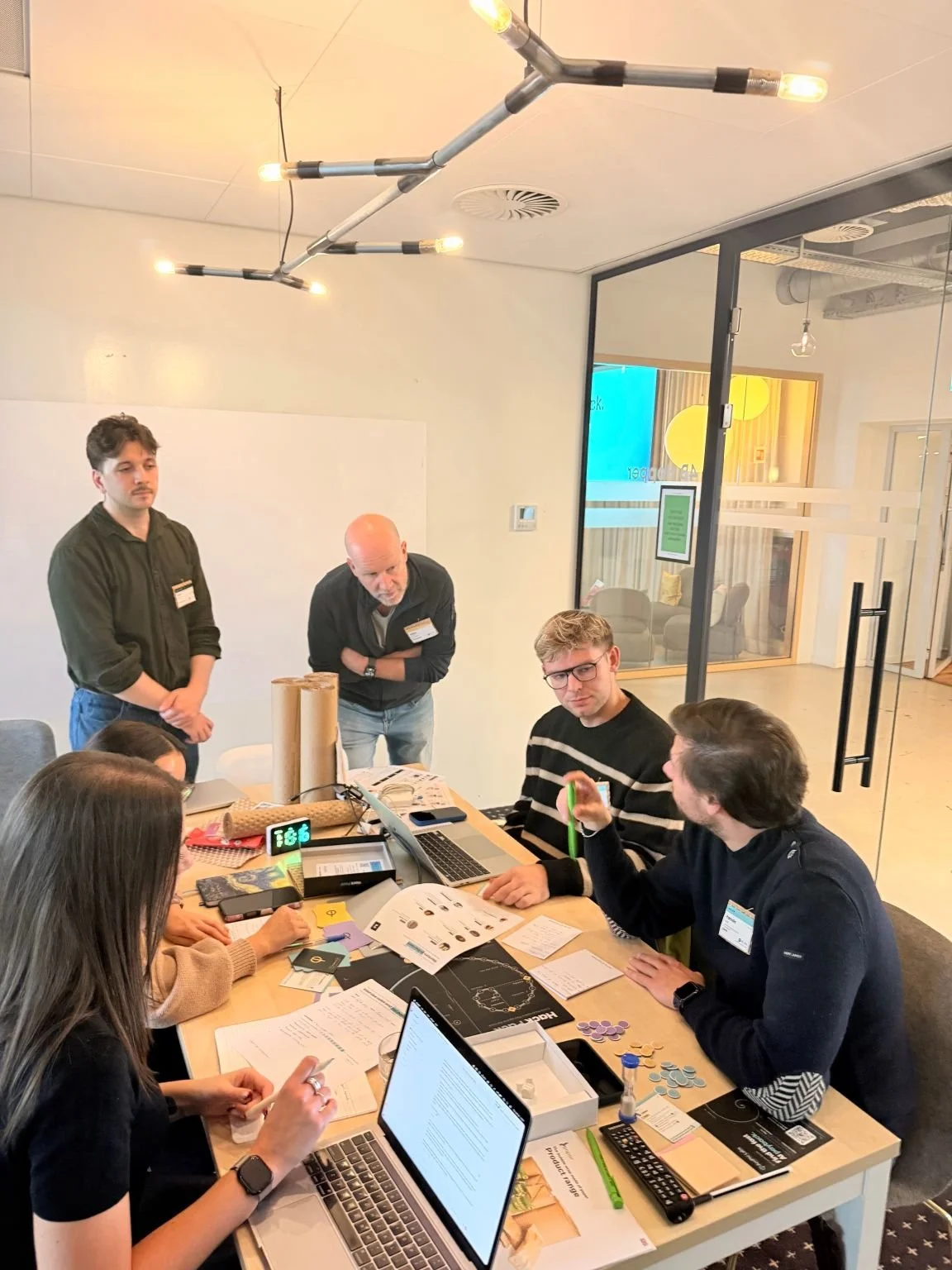
The afternoon was structured around the Hack Pack™, with inspiration cards, challenge cards and evidence gates to move teams from a problem towards an idea they could test. The brief brought four questions together: which material to use, how to protect the product, whether it can be recycled and how it will run on the production line.
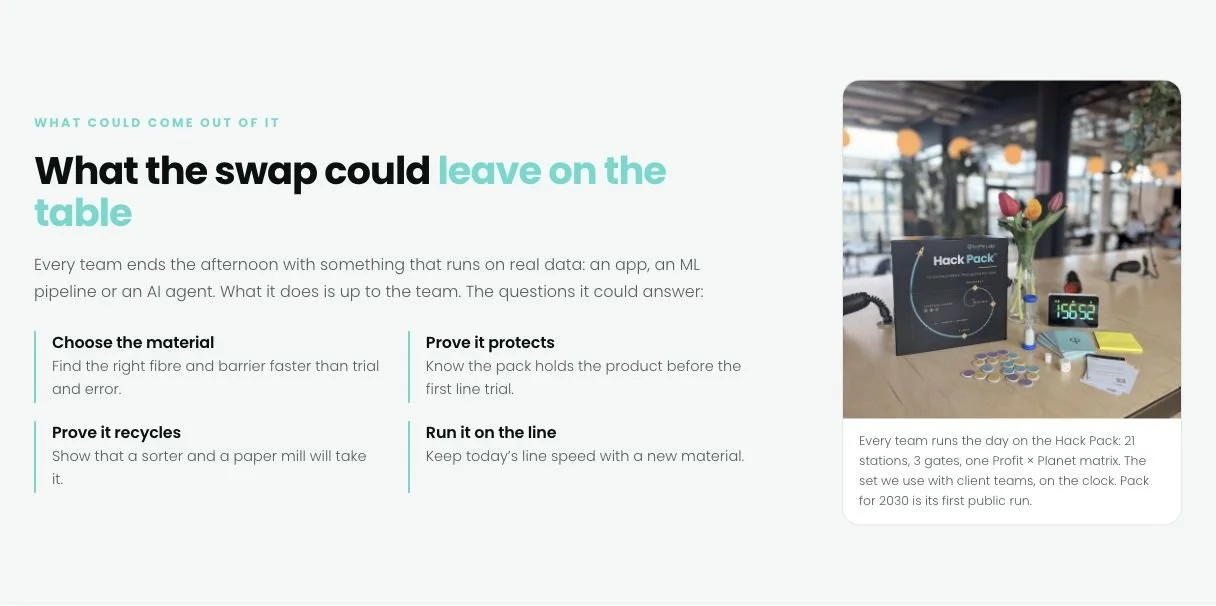
Having different backgrounds around the table helped us question the idea as we developed it. Design, material performance and technical feasibility all had a place in the conversation.
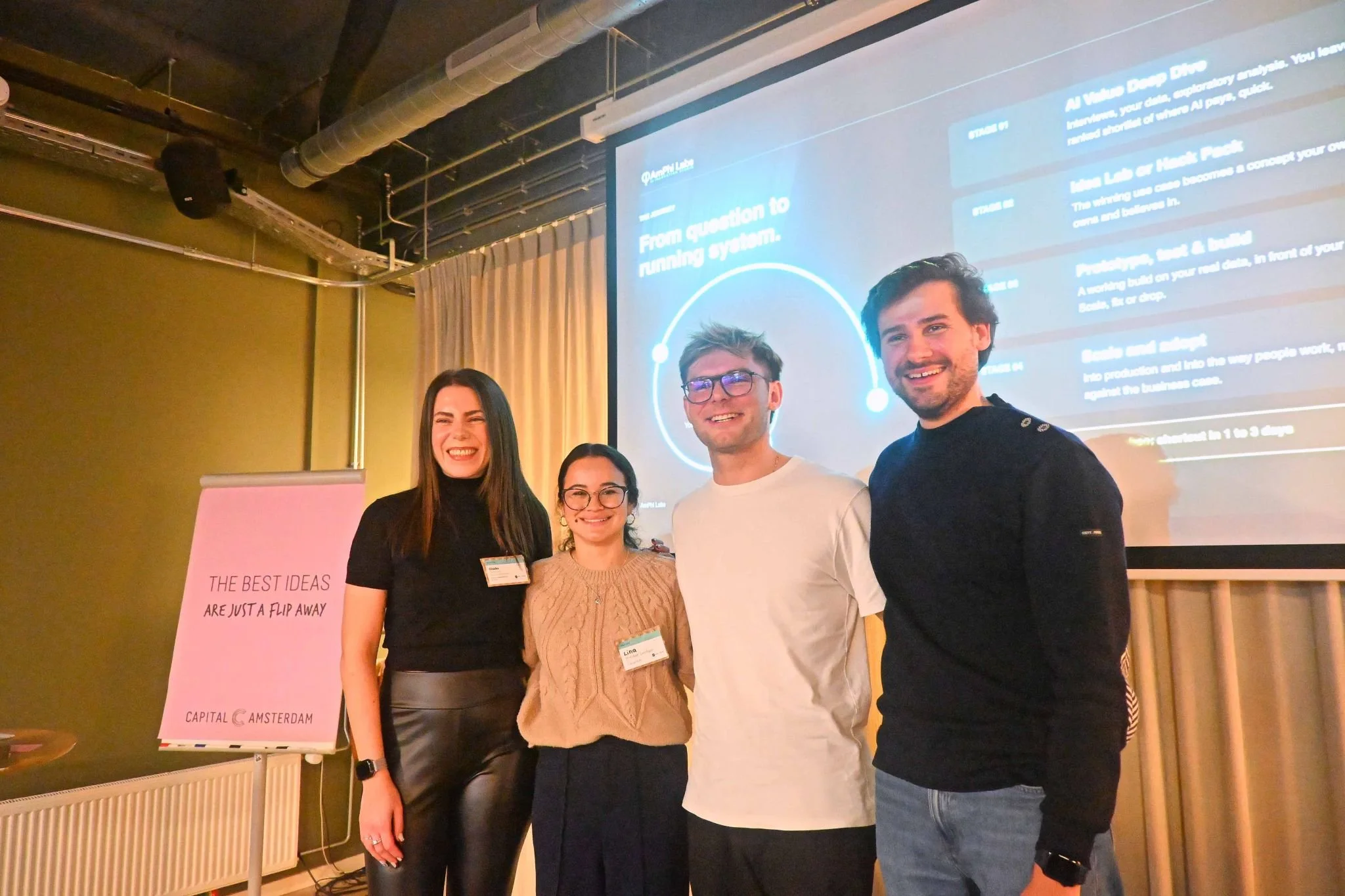
The jury recognised our balance between a broad opportunity and a clearly defined tool: who would use it, what they would provide and how the output could help them.
That was especially encouraging. There is plenty still to investigate, but we left with a concept worth exploring further.
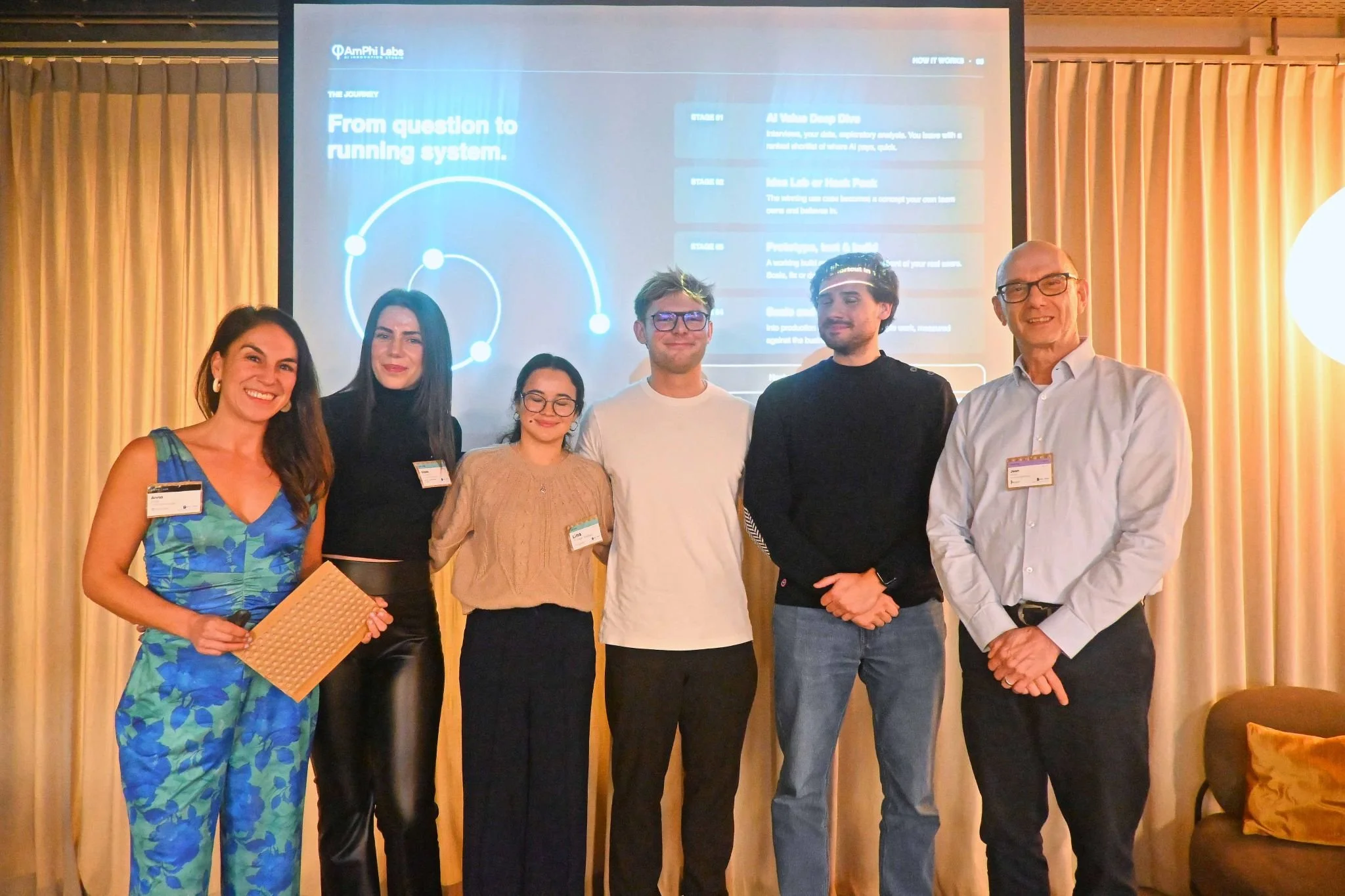
A huge thank you to my teammates, to Anna Oñate, Camila Bühler and the AmPhi Labs team, and to the jury and mentors for their questions and guidance. A special thank you, too, to Paulo Oliveira and Kevin Waller for cheering us on and keeping our team’s energy up.
Thank you also to the event sponsors, papair and Koehler Paper, for helping make the afternoon possible.
The afternoon brought together many of the things I enjoy about packaging design: understanding a real problem, learning from other disciplines and working through the details together.
If your brand is exploring a packaging change, discover our sustainable packaging design services. I’d love to hear what you’re working on.
Event photos shared by AmPhi Labs on LinkedIn.
Event website screenshots: H/Pack for 2030 by AmPhi Labs.